Accessories

BUILDING ENTRY WITHOUT OPENING THE ROLLER SHUTTER DOOR:

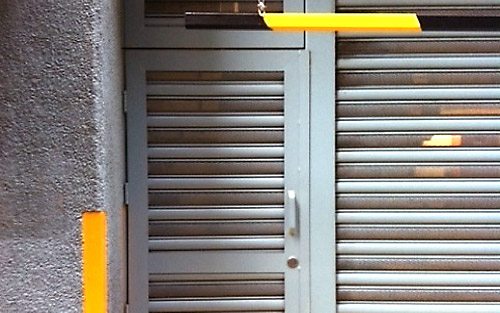
Wicket gates are designed for situations where access is needed through the roller shutter door without opening the roller shutter itself, usually where there is no other access into the building or some staff need access to the warehouse prior to office hours.

We provide two sizes:

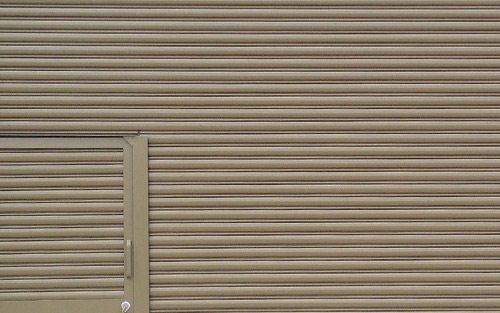
Large wicket gate – approx 1980mm high x 760mm wide – this gate forms part of the roller shutter curtain and can be used as a normal access door whilst keeping the rest of the opening closed by the roller shutter.  This type of gate is usually manufactured to comply with Council requirements.

Small wicket gate – approx. 1200mm high x 600mm wide – used for access into the roller shutter, usually when there is no other access into the area apart from the roller shutter

* Motorised doors are fitted with a wicket gate switch post to stop the door being operated if the access gate is closed into the roller shutter door.

Access gates – optional solution for custom made openings where a wicket gate is not suitable.  These are mounted beside the roller shutter and made out of the same material for aesthetic purposes so they form a part of the whole opening.  In these cases, the fabrication includes head pelmets and side pelmets to enclose the shutter.

OPTIONAL SEALS:

Weatherseals – for deterring dust and debris from entering under the roller shutter, not designed to prevent water.

Brush Seals – to deter the entry of vermin or small birds above the roller shutter, usually at the lintel.

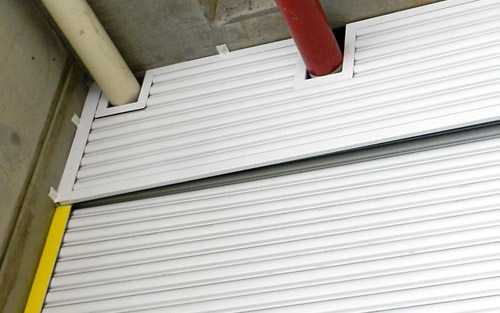
Pelmets – Custom made infills for above and beside roller for closing gap above roller shutter when closed or just for aesthetic purposes.

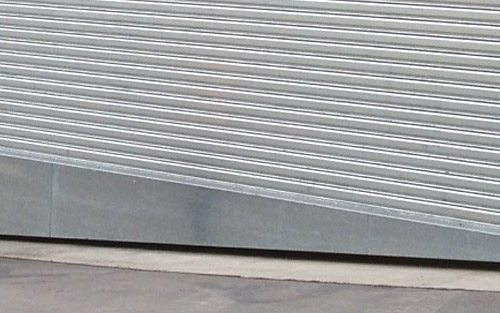
Splayed bottom rails  or cut out bottom rails -  to minimise gaps or spaces beside or under the roller shutter bottom rail where the slope of the ground is different from one side to another, such as on the side of a hill or a ramp – or to simply fit around gutters at the side of a door.

CUSTOM SOLUTIONS TO COMMON BUILDING PROBLEMS:

Thompsons Roller Shutters can design and custom fabricate a solution for your opening including:

Steel supports:  Sometimes surrounding structures are not strong enough to take a roller shutter door.  In these cases, custom made steelwork is manufactured to be used for openings where supporting structure is not of adequate strength to take roller shutter.

Ventilation: 

Often the roller shutter doors is the only source of ventilation or vision into a basement carpark or a garage.  In these cases, the shutter curtain can be slotted or perforated.

Slotting – can cover a whole curtain or a section of curtain. Allows 36% ventilation.

Perfslat panels – can be used as above.  Allows 50.6% ventilation.

Noise and vibration kits can be provided when required.

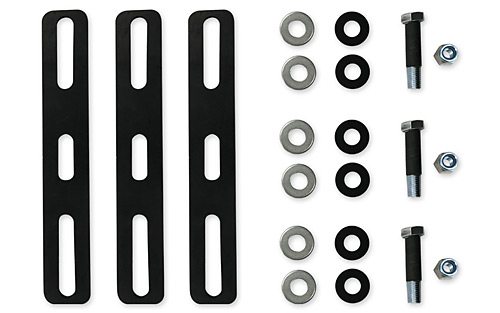
In conjunction with steel angle support jambs, isolating rubber vibration mounts can be fitted to reduce transmission of vibration and sound to the surrounding structures. This type of equipment is not suitable to all openings. If in doubt contact one of our sales consultants to inspect your property.

SECURING YOUR ROLLER SHUTTER:

There are a number of locking mechanisms available for your roller shutter door:

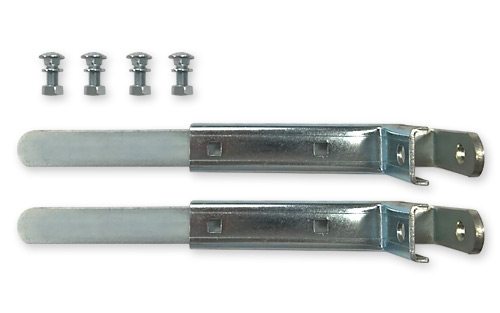
Shootbolts – these are the most common type of locking for shutter doors.  A sliding shoot bolt is fitted which is then secured with a simple padlock.

Centre keyed lift locks:  These are usually fitted on smaller counter type shutters.

Note: It is not recommended to have locks fitted to motorised doors as they lock through the gearbox 

OPERATING YOUR ROLLER SHUTTER DOOR:

We offer a wide range of options in order to be able to operate your roller shutter once it is installed.

Simple operators:  

If no power is available, then the only options are:

  • By hand lift (for small doors) with “D” handles or flush mounted handles
  • By chain reduction gearbox (for larger doors) 

If power is available:

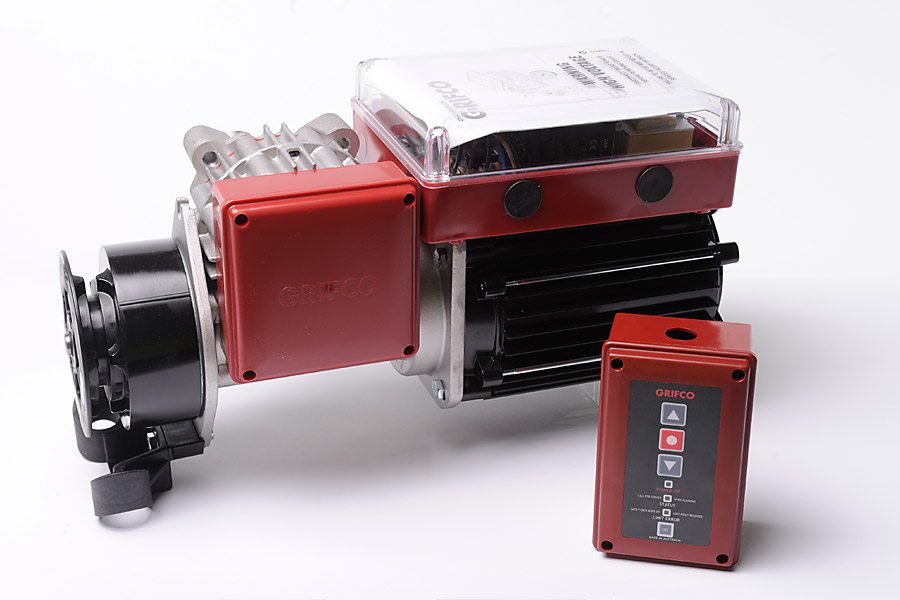
Push button contactors – these are simple wall mounted push button boxes next to the inside of the shutter door –fitted with simple UP, STOP and DOWN buttons and are the standard motor operation system.

Power isolating switches - usually fitted next to the push button contactor, meaning that a key has to be used to turn on the power in order to operate the shutter.  This offers more security as it stops unauthorised persons from opening the roller shutter and therefore leaving the premises open.

Key operated switches – can be fitted to the inside or outside of the shutter in place of the push button contactor.   Invaluable for buildings where the only access is through the roller shutter, or where certain staff need access outside business hours when the office is unmanned and locked.

More advanced operators:

Logic Control boards allow multiple functions to be enabled and allows input with other systems:

  • remote controls
  • card readers
  • loop detectors
  • fire and smoke systems
  • automatic 7 day  or 365 day timers.

Fitting your door with logic control equipment:

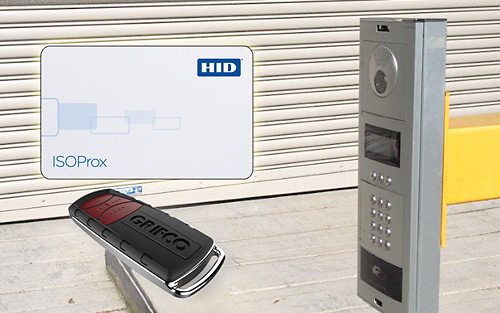
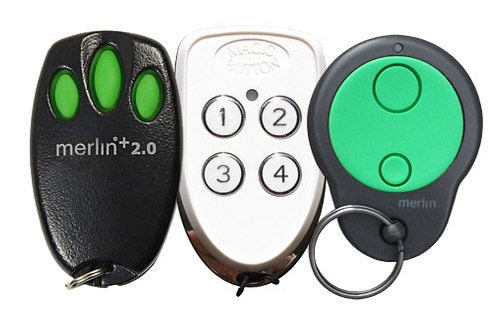
Remote controls:  These can be key ring type button controls or small hand held remotes, similar to a mobile phone.  They are coded in to work with the motor unit using a special code that is usually set by the manufacturer.

Card Systems:  usually linked in via your building’s security company In this case, a card, similar to a credit card, is used in place of a remote control.  The advantage is that it is less bulky and if a card is lost, or a tenant leaves without returning their card, the card identification number can be deleted from the equipment and therefore, the card cannot be used again.  The cards are less costly than the remote controls.

Wiring the door to work with the building fire system:

Certain logic systems have the ability to be interfaced with building fire systems, which mean they close when there is a fire.

Smoke detectors: enabling the door to close as part of fire protection system within a building.

Automatic timers: allowing for automatic open and closure at certain times of day or at different times for different days of the week, e.g. weekends.

Card access is required to access the door out of hours. 

SAFETY:

Touch sensitive auto reversing bottom rails:  To prevent door coming down on obstacle in its path, the door simply reverses when it touches the obstacle.

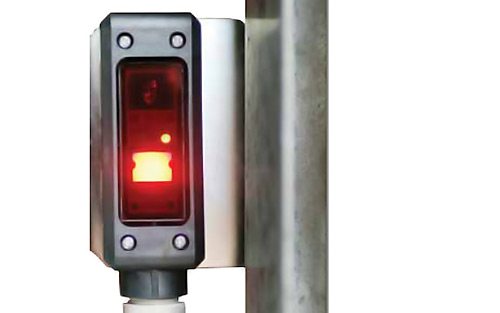
Photo Electric beams:  These are a must when logic control equipment is fitted to a door.  Without them, a door can close without knowing anything is below it.  Beams are used to detect vehicles or objects blocking the path of the beams, and cause it to stop and reverse back up. 

COVERING A WIDE OPENING WITH MULTIPLE SHUTTERS:

In many cases, it is preferable to be able to open a large area on the side of a building or warehouse.

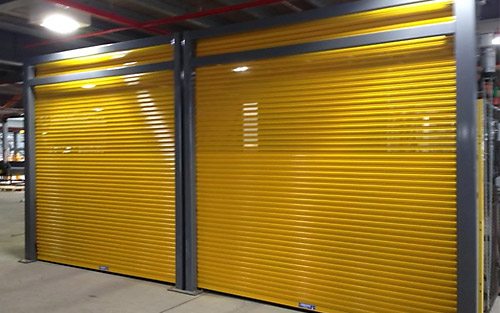
In this case, mullions are used which are basically steel structures with side guides fitted each side to allow the shutters to close into them.

Sliding centre mullions:  These mullions are designed to slide out of the way when the doors are open.

Hinged mullions:  These mullions are designed to be lifted up against the ceiling and secured horizontally via a manual or electronic winch.

COLOUR FINISHES: